A Young Man’s Guide To Navigating The Modern Era
Something to listen to while reading!
Amidst the turmoil of everyday life, it can become increasingly difficult to ascertain what it truly means to be a man.
How does the average boy become a man?
How do we become better men?
How can we do it together?
These are the questions that I seek to answer.
Men hold a compelling place in society; masculinity gone unchecked leads to numerous things going awry. I am no expert; I’m a student and an explorer looking for answers. I’m reaching out to you, my peers, to join me on this journey to better our lives. I invite you to take a moment of your day to sit with me and mull over the discoveries I make in my studies of masculinity.
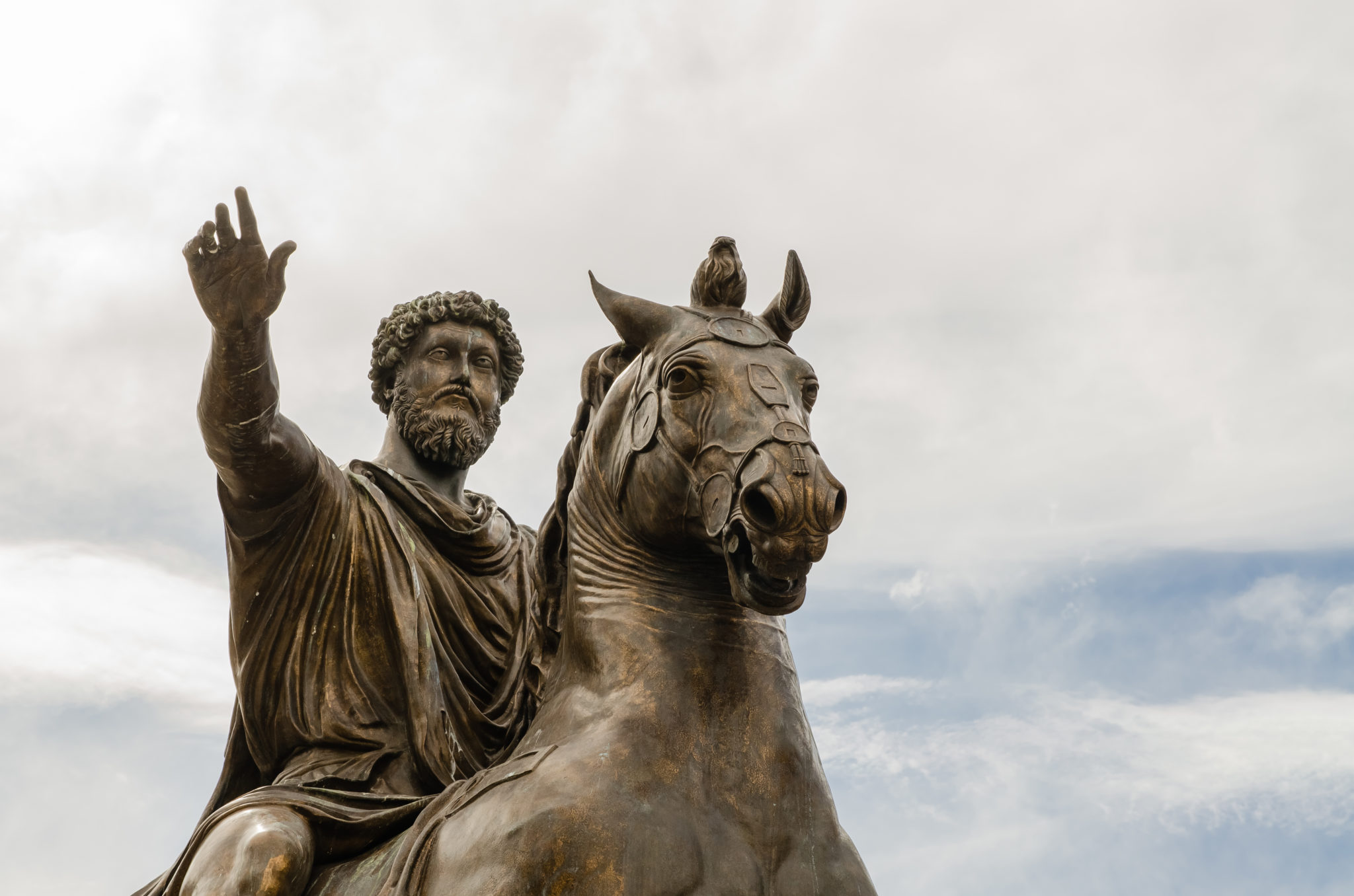
To kick off our first edition, I’m starting with a re-read for myself: the Emperor’s Handbook, Marcus Aurelius. Perhaps the sudden shift in my everyday life caused me to pick up this stoic classic, but it is a short, sweet, and concise new translation of Emperor Marcus Aurelius’ Meditations.
Although I wouldn’t classify myself as a stoic, there are aspects of Stoicism I find appealing. Like many philosophies, it has flaws; however, in the transitional stage of going from juvenile to adult, it plays a pivotal role in a man’s development. This is especially true in the collegiate setting; I seek to discover answers to the everyday dealings with our fellow man.
For some context, Marcus Aurelius was the last of the “5 good emperors.” The Hicks brothers (this book’s translators) characterize him as Plato’s ideal philosopher king. He was a contemplative man; however, unlike the scholars of the time, he was a man of action. Marcus firmly believed in practical wisdom and how to apply philosophical teachings to everyday life. No one knows how Meditations survived, but essentially, they were his notes, affirmations he kept for himself as a reminder of his guiding principles. Scholars theorize that Marcus wrote his guidebook during the last 13 years of his life when the emperor battled German tribesmen on the murky marshes of the Danube. Historians presume that he died during this campaign from the sheer exhaustion of fighting.

Marcus was a statesman, father, and general. Although he preached for a world where all men were equal and stated that he was pursuing the liberty of all men, it ultimately served as lip service. His legislation would “favor the ruling class (honestiores) over the common people (humiliores).” In a position of power, his wife would go on to cheat on him, his children would turn against him, and his generals would challenge him.
Yet, throughout all this adversity, he would conquer and treat them with kindness and forgiveness. Aurelius would also hold a staggering 200+ court days, in which he would personally decide the verdict of the numerous crimes of the kingdom. He showed great initiative and intense resolve in his rule.
How’d he do it?
It was because of his catchphrase, “It’s up to you!”
The big takeaway here is that you are in charge of your destiny. If you want changes in your life, you only have the power to make them.
This leaves me wondering: initiative is great, but how do I do that?
How do I become more punctual?
How do I manage my time better?
How do I get more consistent in the Gym?
At school?
At work?
Initiative, the drive to overcome your laziness, the fundamental belief that you are responsible for your failures and your successes. However, drive alone cannot take you far. As we will discuss next week, habits are the make or break. Building good ones and breaking bad ones.
I’ll leave you with one final point from my readings this week. I have been implementing this advice in my own life, which has dramatically helped me. Emperor Aurelius describes the mind as a dwelling; just as a dwelling has furnishings, a mind has thoughts and ideas.
Just as you would furnish your home with comfortable or practical furniture, furnish your mind with positive and constructive ideas. The more space allocated to this, the easier you will find it to protect your peace and be productive.
So the next time someone comes complaining to you as a raging ball of negativity, tell them no and complain elsewhere. Anytime you find yourself spiraling out into negativity, think on the bright side and try to recall all the good traits your friends have. Think of one’s modesty, another’s intellect, another’s strength, and so on and so on. This way, you’ll always find your mind to be in a harmonious state.
That concludes this week’s issue; if you want me to read another book, please email it to lumiosed@gmail.com. As for now, though, next week’s issue will either be a continuation of this, AH Maslov’s The Farther Reaches of Human Nature, or David Goggin’s You Can’t Hurt Me.
If you have a preference, feel free to let me know!
Adios Gents!
 check the press
Leave a comment